From Sputnik to Starship
A history of spaceflight
From the first beeping satellite to reusable rockets and the return to the Moon: the programs, launches and people that defined the space age.
1957–1961
Dawn of the Space Age
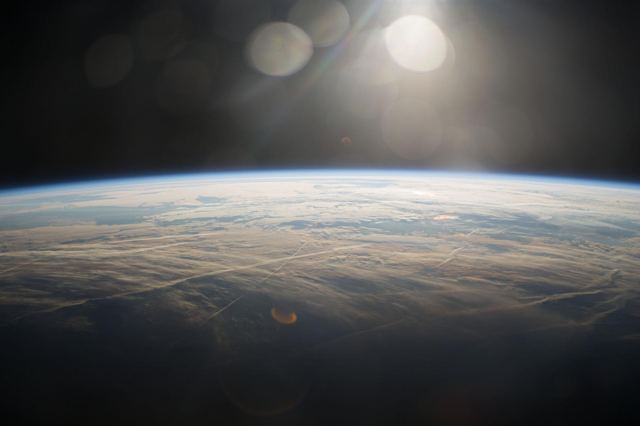
A beeping metal sphere changed everything. The race between the United States and the Soviet Union turned rockets built for war into machines of exploration, and within four years a human being had circled the planet.
- USSR
Sputnik 1
The Soviet Union places the first artificial satellite in orbit. Its simple radio signal is heard by listeners around the world.
- USSR
Sputnik 2
The dog Laika becomes the first animal to orbit Earth, proving a living creature could survive launch and weightlessness.
- USA
Explorer 1
America's first satellite rides a Juno I rocket from Cape Canaveral. Its instruments lead to the discovery of the Van Allen radiation belts.
- USA
NASA opens its doors
The National Aeronautics and Space Administration begins operations, bringing America's civilian space work under one agency.
- USSR
Luna 3
A Soviet probe returns the first photographs of the Moon's far side, a face of our neighbor no human had ever seen.
- USSR
Vostok 1
Yuri Gagarin completes a single orbit of Earth in 108 minutes and becomes the first human in space.
1958–1963
Project Mercury
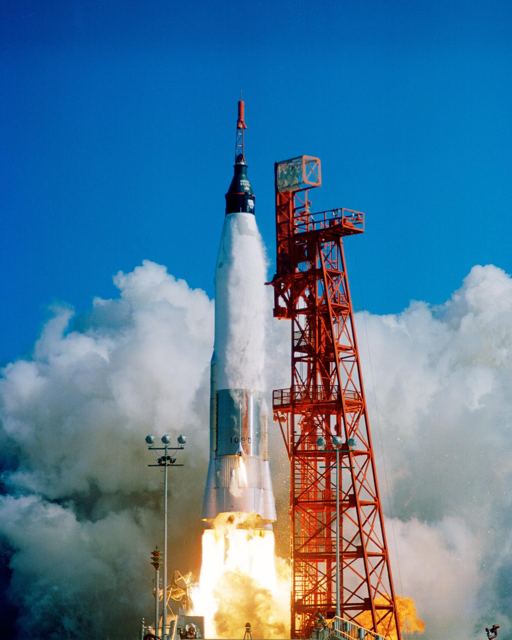
America's first human spaceflight program put one astronaut at a time inside a capsule barely larger than a phone booth. Seven test pilots, the Mercury Seven, became national heroes almost overnight.
- USA
Freedom 7
Alan Shepard rides a Mercury-Redstone on a 15-minute suborbital arc, becoming the first American in space.
- USA
Friendship 7
John Glenn circles Earth three times aboard a Mercury-Atlas, the first American to reach orbit.
- USA
Faith 7
Gordon Cooper flies the final Mercury mission, spending more than a day in orbit and completing 22 revolutions.
- USSR
Vostok 6
Valentina Tereshkova becomes the first woman in space, orbiting Earth for almost three days.
1965–1966
Project Gemini
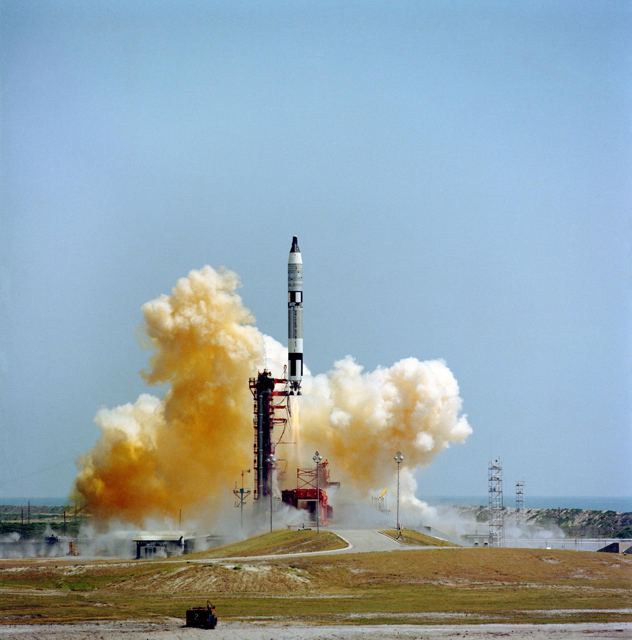
Gemini was the bridge to the Moon. Two-person crews practiced everything Apollo would need: long-duration flight, spacewalks, rendezvous and docking. Ten crewed flights flew in just twenty months.
- USSR
Voskhod 2
Alexei Leonov steps outside his spacecraft for the first spacewalk in history.
- USA
Gemini 3
Gus Grissom and John Young fly the first crewed Gemini and the first crewed spacecraft to change its own orbit.
- USA
Gemini 4
Ed White floats outside the capsule for about 20 minutes, the first American spacewalk.
- USA
Gemini 6A meets Gemini 7
Two crewed spacecraft fly in formation just feet apart, the first true space rendezvous.
- USA
Gemini 8
Neil Armstrong and David Scott perform the first docking of two spacecraft, then recover from a dangerous stuck thruster.
- USA
Gemini 12
Buzz Aldrin's spacewalks show that astronauts can do useful work outside a spacecraft, closing out the program.
1967–1972
Apollo: To the Moon
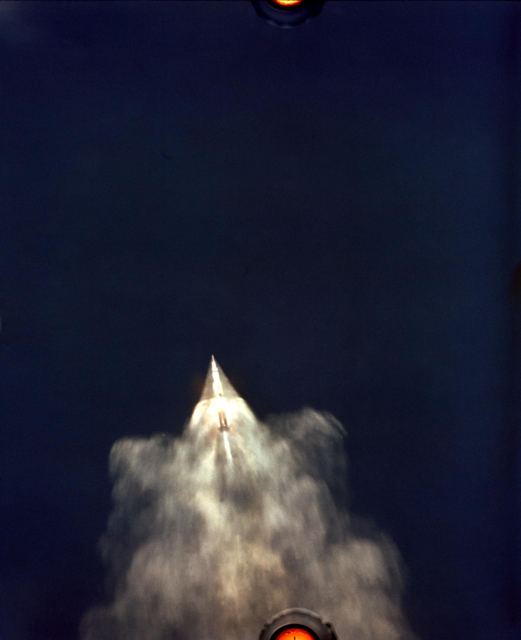
Apollo is the summit of the early space age. The Saturn V, still among the most powerful rockets ever flown, carried 24 astronauts to the Moon, and twelve of them walked on its surface between 1969 and 1972.
- USA
Apollo 1
A cabin fire during a ground test takes the lives of Gus Grissom, Ed White and Roger Chaffee. The spacecraft is redesigned from the ground up.
- USA
Apollo 7
The first crewed Apollo flight spends eleven days in Earth orbit testing the redesigned command module.
- USA
Apollo 8
Frank Borman, Jim Lovell and Bill Anders become the first humans to leave Earth orbit and circle the Moon. On Christmas Eve they photograph Earthrise.
- USA
Apollo 11
Neil Armstrong and Buzz Aldrin land in the Sea of Tranquility on July 20 while Michael Collins orbits overhead. Humanity's first footsteps on another world.
- USA
Apollo 13
An oxygen tank fails on the way to the Moon. The crew uses the lunar module as a lifeboat and returns safely on April 17.
- USA
Apollo 15
The first Lunar Roving Vehicle lets astronauts range miles from their lander at the foot of the Apennine Mountains.
- USA
Apollo 17
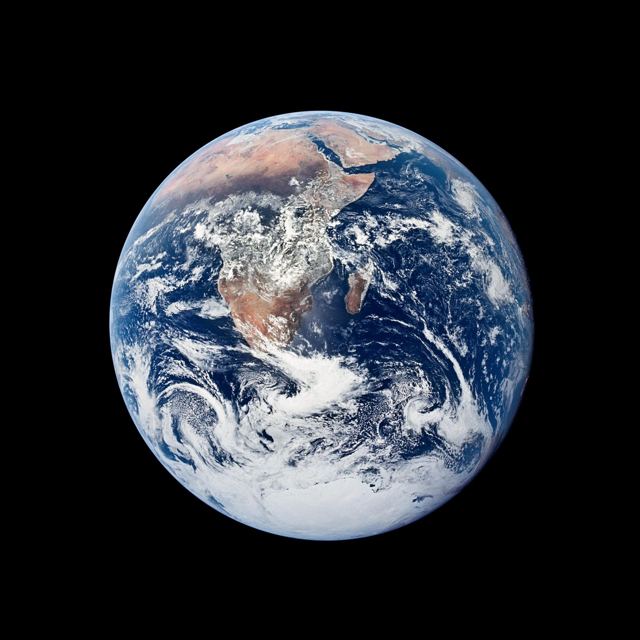
The final Apollo Moon mission launches at night. Gene Cernan and Harrison Schmitt spend three days at Taurus-Littrow, and the crew photographs the famous Blue Marble.
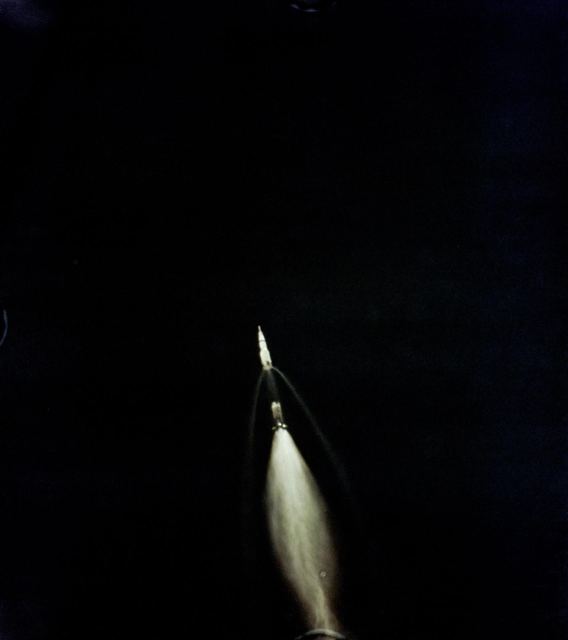
Listening from the sky: the ARIA aircraft
Ground tracking stations could not cover every part of Apollo's path, especially over the oceans during launch, orbit insertion and the burn that sent crews toward the Moon. To fill those gaps, NASA and the Department of Defense modified eight Boeing C-135 jets into Apollo Range Instrumentation Aircraft, known as ARIA.
Each EC-135N carried a steerable seven-foot antenna inside a bulbous 'droop snoot' nose. The aircraft relayed astronaut voices and recorded spacecraft telemetry from wherever they were stationed around the globe. The fleet became operational in January 1968, flying for the Air Force Eastern Test Range at Patrick Air Force Base, Florida.
After Apollo, the name became Advanced Range Instrumentation Aircraft. In December 1975 the fleet moved to the 4950th Test Wing at Wright-Patterson Air Force Base, Ohio, and went on supporting space launches, missile tests and treaty verification. It moved to Edwards Air Force Base, California, in 1994. The last ARIA, EC-135E serial 60-374, was retired to the National Museum of the United States Air Force in 2000.
Site owner Randy L. Losey was an ARIA crewmember: the antenna operator on ARIA 60-0374, part of the PMEE (Prime Mission Electronic Equipment) crew. ARIA 60-0374 is the last of the original 8 ARIA aircraft used for Apollo and is on display at the National Museum of the U.S. Air Force in Dayton, Ohio.
1971–2001
Living in Orbit
After the Moon, the goal shifted to staying in space. Space stations taught engineers and doctors how people live and work in weightlessness for months at a time.
- USSR
Salyut 1
The Soviet Union launches the world's first space station.
- USA
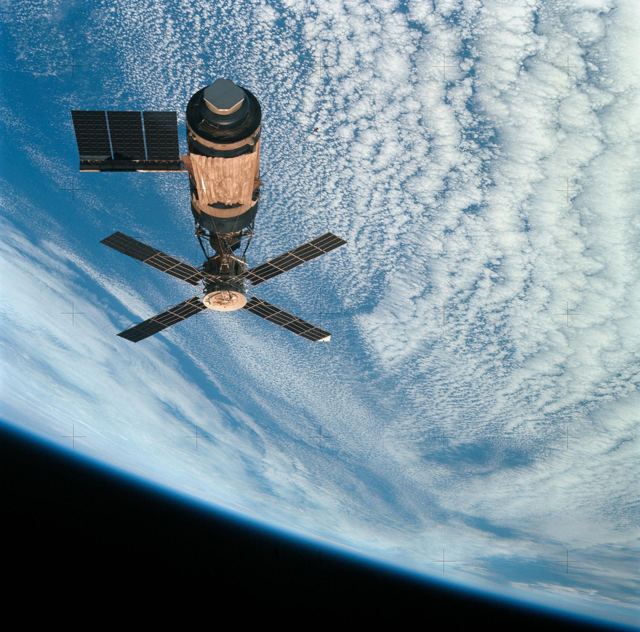
Skylab
America's first space station, built from a leftover Saturn V stage, is launched. Three crews live aboard during 1973 and 1974.
- USA / USSR
Apollo–Soyuz
An American Apollo and a Soviet Soyuz dock in orbit, and the crews shake hands, a symbolic thaw in the Cold War.
- USSR
Mir
The core of Mir is launched. Expanded module by module, it hosts crews almost continuously for over a decade before its controlled reentry in 2001.
1981–2011
The Space Shuttle
The Space Shuttle was the world's first reusable crewed spacecraft. Over 30 years and 135 missions, five orbiters launched satellites and observatories, served as science labs and built the International Space Station.
- USA
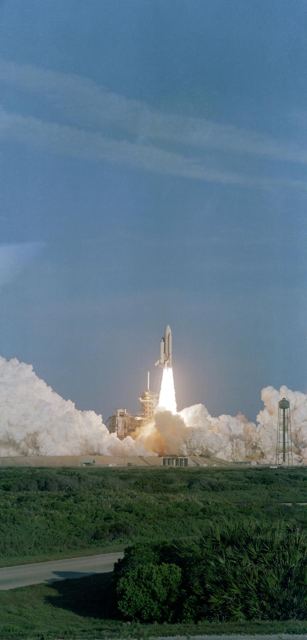
STS-1
John Young and Robert Crippen fly Columbia on the first Shuttle mission, twenty years to the day after Gagarin.
- USA
Challenger
Challenger breaks apart 73 seconds after launch, and all seven crew members are lost.
- USA / Europe
Hubble Space Telescope
Discovery carries Hubble to orbit. After a servicing mission corrects its optics in 1993, it transforms astronomy.
- USA
Columbia
Columbia is lost during reentry at the end of STS-107, and its seven astronauts are killed.
- USA
STS-135
Atlantis lifts off on the final Shuttle flight and lands on July 21, closing a 30-year era.
1998–today
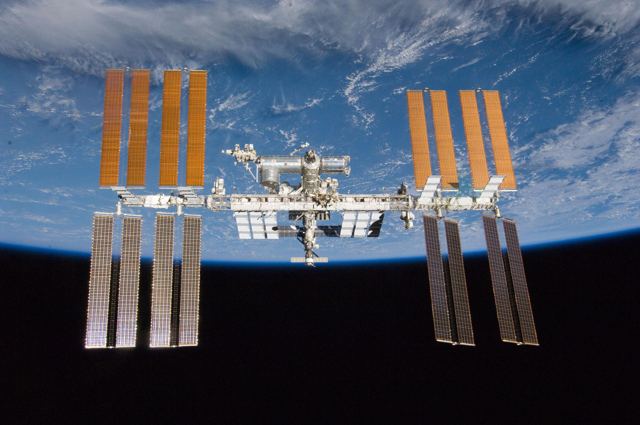
The International Space Station
Built by the United States, Russia, Europe, Japan and Canada, the ISS is the largest structure humans have assembled in space. People have lived aboard without interruption since November 2000.
- Russia / USA
Zarya
A Russian Proton rocket launches the first ISS module. The American Unity node joins it the following month.
- International
Expedition 1
The first resident crew arrives, beginning continuous human presence in orbit that continues today.
- USA
Dragon
SpaceX's Dragon becomes the first commercial spacecraft to be berthed to the ISS, opening the era of commercial cargo.
1965–today
A Worldwide Endeavor
Space is no longer a two-nation contest. Europe, China, Japan and India built their own rockets and science programs, and dozens of countries now operate satellites.
- Japan
Ohsumi
Japan becomes the fourth nation to orbit a satellite on its own rocket.
- China
Dong Fang Hong 1
China's first satellite reaches orbit and broadcasts the song 'The East Is Red'.
- Europe
Ariane 1
The first Ariane rocket flies from French Guiana, launching Europe into the commercial launch market.
- India
Rohini on SLV-3
India places a satellite in orbit with its own launcher.
- China
Shenzhou 5
Yang Liwei becomes China's first astronaut, making China the third nation to launch a person into orbit independently.
- India
Mars Orbiter Mission
India's Mangalyaan reaches Mars orbit on its first attempt.
- Europe
Rosetta and Philae
ESA's Philae lands on a comet, 67P/Churyumov–Gerasimenko, a first in history.
- China
Chang'e 4
China makes the first soft landing on the far side of the Moon.
- China
Tianhe
The core module of China's Tiangong space station is launched.
- USA / Europe / Canada
James Webb Space Telescope
Webb launches on an Ariane 5 on Christmas Day and begins a new era of infrared astronomy.
- India
Chandrayaan-3
India lands near the Moon's south polar region, becoming the fourth nation to soft-land on the Moon.
- Japan
SLIM
Japan's 'Moon Sniper' lands within 100 meters of its target, making Japan the fifth nation to soft-land on the Moon.
2004–today
The Commercial Revolution
Private companies have rewritten the economics of spaceflight. Landing and reusing boosters, once science fiction, is now routine, and launch rates have climbed to levels not seen since the height of the Cold War.
- USA
SpaceShipOne
A privately built spaceplane wins the Ansari X Prize, 47 years to the day after Sputnik.
- USA
Falcon 1
On its fourth try, SpaceX reaches orbit with the first privately developed liquid-fueled rocket to do so.
- USA
New Shepard
Blue Origin lands a rocket vertically after it flies to space.
- USA
Falcon 9 lands
A Falcon 9 first stage returns to Cape Canaveral after an orbital launch, the first landing of an orbital-class booster.
- New Zealand / USA
Electron reaches orbit
Rocket Lab's small Electron rocket reaches orbit from New Zealand's Mahia Peninsula.
- USA
Falcon Heavy
Falcon Heavy debuts, sending a test payload into an orbit around the Sun and landing its two side boosters side by side.
- USA
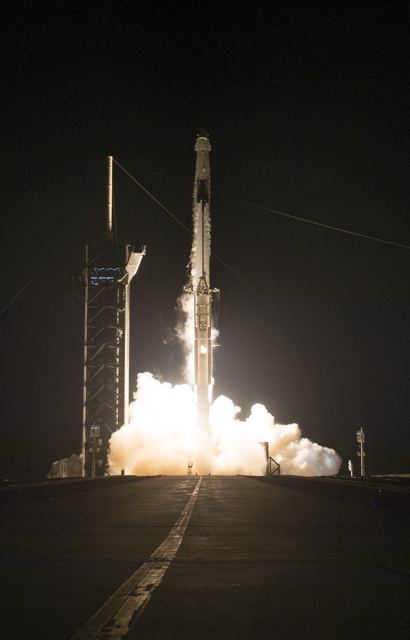
Crew Dragon Demo-2
Bob Behnken and Doug Hurley launch to the ISS, the first crewed orbital launch from U.S. soil since 2011.
- USA
Inspiration4
The first orbital mission with an all-private crew spends three days circling Earth.
- USA
Starship first flight
SpaceX launches the full Starship stack for the first time from South Texas.
- USA
Booster catch
The launch tower catches a returning Super Heavy booster with its mechanical arms on Starship's fifth flight.
- USA
New Glenn
Blue Origin's heavy-lift New Glenn reaches orbit on its first flight.
2017–today
Artemis: Back to the Moon
NASA's Artemis program aims to return astronauts to the Moon, this time to stay, with international partners and commercial landers, as a stepping stone toward Mars.
- USA
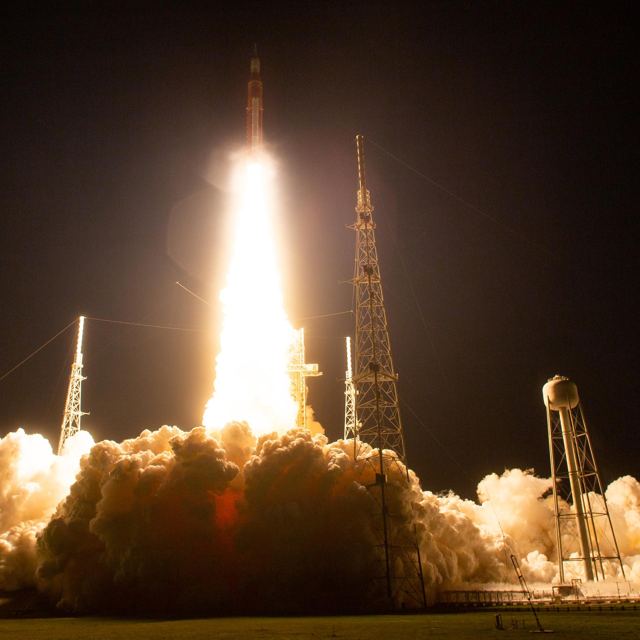
Artemis I
The Space Launch System flies for the first time, sending an uncrewed Orion around the Moon. Orion splashes down on December 11.
- USA / Canada
Artemis II
Reid Wiseman, Victor Glover, Christina Koch and Canada's Jeremy Hansen fly around the Moon, the first crew to leave Earth orbit since 1972. They splash down off San Diego on April 10.
History text is original to World Space Launch and based on public records from NASA, the U.S. Air Force and other agencies. Spotted an error? Corrections are welcome.